Minimum remaining shelf life: the 75% rule and how to calculate it
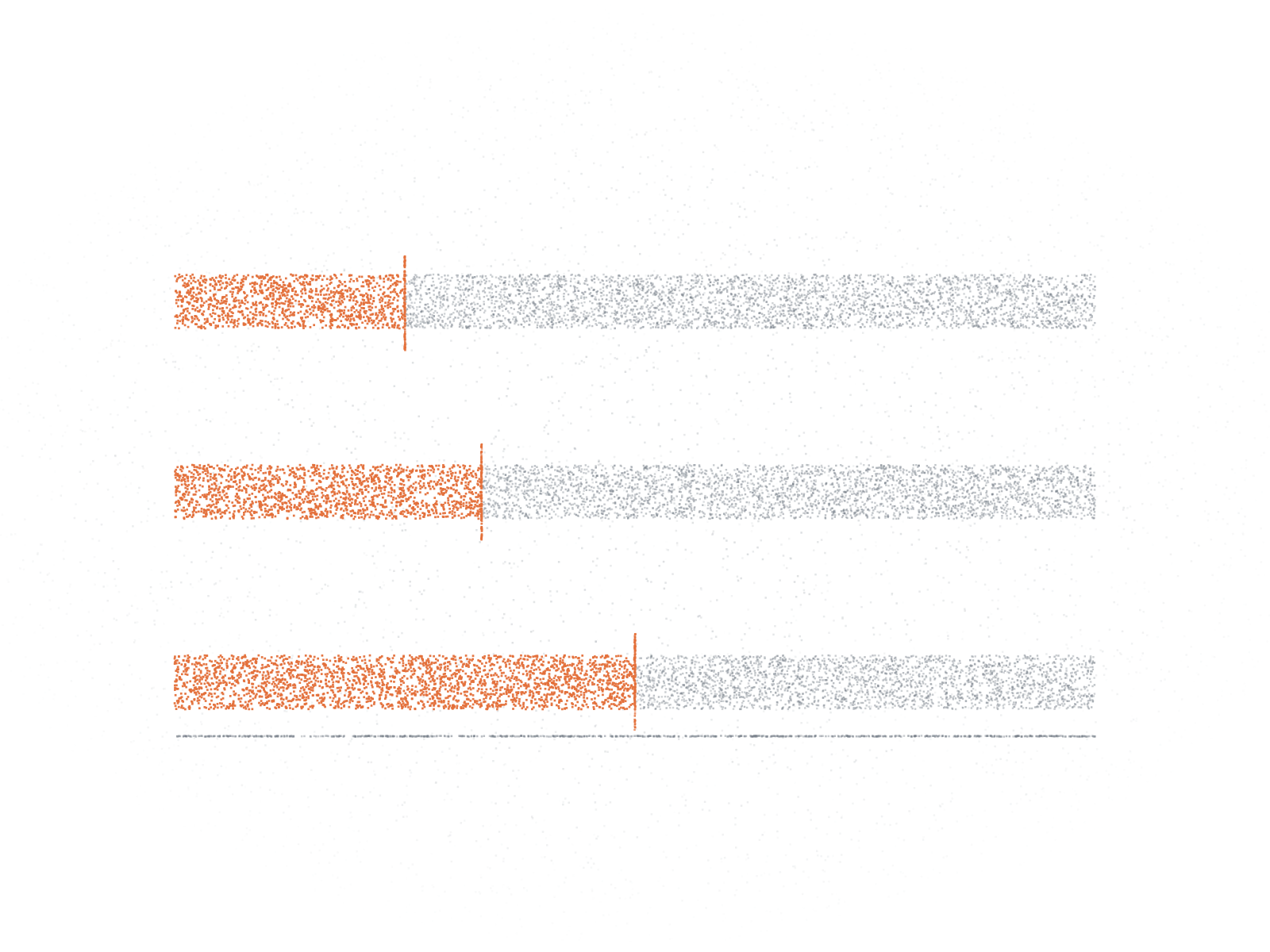
A buyer that asks for 75% minimum remaining shelf life wants a 12-day product delivered with 9 days left, so it must arrive within 3 days of being made, and those 3 days have to cover making, storing and moving it. A frozen product with 360 days of life must arrive with 270; if it reaches the cold store 20 days old and takes 5 days to the buyer, it can wait there 65 days at most. At half the shelf life left, the same lot could wait 155. The sum is short, but the rule sits on contracts, the numbers come out in days, and the rounding goes one way only.
The calculation in four steps
A minimum remaining shelf life is the part of a product’s life a buyer wants left when it is delivered, as a share of the total or as days (What is minimum remaining shelf life?). Start from the total shelf life, production to expiry, in days:
- Share left at delivery = days left at delivery ÷ total shelf life.
- Days needed at delivery = total × the buyer’s share, rounded up to a whole day.
- Latest age at delivery = total − days needed. Past that age, the lot is still good but that buyer can refuse it.
- Latest age to leave the store = latest age at delivery − days in transit.
A fifth line is the warehouse’s: longest wait in the store = latest age to leave − age when the lot arrived.
Rounding up matters at the edge. 75% of a 365-day life is 273.75 days, so a delivery with 273 days left has 74.8% of its life and fails; 274 days is 75.1% and passes.
| Product, total life | Buyer’s rule | Days needed at delivery | Arrive by age | Leave the store by age |
|---|---|---|---|---|
| Chilled, 12 days | 75% | 9 | 3 | 2 (1 day to the buyer) |
| Chilled, 30 days | 75% | 23 | 7 | 6 (1 day) |
| Ambient, 180 days | ⅔ left (Japan’s ⅓ rule) | 120 | 60 | 57 (3 days) |
| Ambient, 180 days | ½ left | 90 | 90 | 87 (3 days) |
| Frozen, 360 days | 75% | 270 | 90 | 85 (5 days) |
| Frozen, 360 days | ⅔ left (Japan’s ⅓ rule) | 240 | 120 | 115 (5 days) |
| Frozen, 360 days | ½ left | 180 | 180 | 175 (5 days) |
Ages are days since production. The same arithmetic gives the glossary’s example: 360 days of life, a buyer asking for ⅔ (240 days) and 10 days in transit, so the lot must leave within 110 days of production.
What the rules ask
The share is set by the buyer, in a contract or a supplier manual, or by trade custom and guidelines, and the published ones differ:
- 75%, retail. The Grocer reported in 2003, citing suppliers, that Tesco was asking for 75% of shelf life on some lines: “if a product has a total shelf life of 12 days, Tesco wants nine of them”.The Grocer, 2 August 2003. The 75% is the suppliers’ account; Tesco was unavailable for comment.
- 75%, outside food. Boeing’s quality clause for age-controlled items says they “must arrive at Buyer’s facility with at least 75% of the specified shelf life remaining” (clause Q863, 2010).
- ⅓ rule, Japan. Japan’s food trade has a custom of delivering to the store within the first third of the best-before period, so a product arrives with at least ⅔ of it left. The Ministry of Agriculture, Forestry and Fisheries says goods that miss it may be thrown away with many days of life left. In 2020 it called on retailers to relax the deadline to about ½ left for three items that a working group it set up found low-risk in trials: drinks, sweets with at least 180 days of life and cup noodles. By October 2026, 393 food retailers had relaxed the deadline or planned to.
- Months by stage, medicines. The WHO gives an example table rather than a share: a medicine with more than 24 and up to 36 months of total life should leave the maker with 20 months, reach the port of entry with 15 and the end user with 6. As shares that is 56%, 42% and 17% for a 36-month product, but 67%, 50% and 20% for a 30-month one: the months stay fixed within a band, so the share moves.WHO TRS 1044 (2022), Annex 8, Appendix 1, Table 1: an example “based on the outcome of risk assessment”, to be set in agreements between suppliers, buyers and recipients.
- EU medicines distribution sets no number: the product “should have an appropriate remaining shelf life when it is picked” (2013/C 343/01, § 5.7).
How long a lot can wait in the store
The buyer’s rule sets how long a lot can stay in the store. The frozen product again: 360 days of life, 20 days old when it arrives, 5 days to the buyer.
At 75% the lot has 65 days in the store; at ⅔, 95; at ½, 155. Each of these depends on the inbound age too: a lot that arrives 50 days old instead of 20 has 30 days fewer to wait, whatever the rule.
Short shelf life: where 75% leaves no room
On chilled goods the same quarter of the life is a few days. A 12-day product at 75% must reach the buyer by day 3; with 1 day on the road it must leave by day 2. A 30-day product must arrive by day 7. For such a buyer there is almost no time to hold stock: at most 2 days from production to leaving the store for the 12-day product.
Two buyers, one lot
A lot that is too old for one buyer may still suit another. With the frozen product, a 75% buyer takes it until it leaves at day 85, a ½ buyer until day 175. So the arithmetic says: send the oldest lots to the buyers with the lowest rule, and the youngest to the strictest.
That is also why FEFO is not the whole rule: the earliest-expiring pallet can be past one buyer’s limit while it still suits another. The arithmetic points to a check per buyer: FEFO among the lots that buyer will still accept. It works only if the store knows each pallet’s lot and its date (Lot number vs batch number).
Days or percent
The rules above are mostly shares; product data carries days. GS1’s product attribute for it, Minimum Trade Item Lifespan from Time of Arrival, is “the period of days, guaranteed by the manufacturer, before the expiration date of the trade item”, and must be given in days. A 75% rule becomes a different number of days for every product, so convert per product and per buyer, rounding up, before the rule reaches a receiving screen.
Where it breaks
- The rule is a contract term. Buyers and categories differ, and import rules are not covered here. Read the buyer’s own wording.
- “At least” or “greater than”. Boeing’s clause says “at least 75%”; SAP’s documentation says the remaining shelf life “must be greater than” the minimum for a batch to be accepted at goods receipt, with a warning or an error by setting. A delivery at exactly the minimum can be flagged.
- Where the clock stops. At dispatch, at the buyer’s warehouse or at the store: each moves the answer by the transit days. The WHO table gives a number for each of three stages.
- Whole days. Pack dates are days; a lot made late in the day is counted the same as one made early.
- The ½ rows are arithmetic. Japan’s relaxation covers the three recommended items, not frozen food in general; the frozen ½ row shows what the rule would do.
- Which date. Best-before and use-by dates are a food-law question this post does not settle; the arithmetic is the same for both.
Sources
- WHO, Points to consider for setting the remaining shelf-life of medical products upon delivery, TRS 1044 (2022), Annex 8: § 3 definitions, § 5, Appendix 1 Table 1.
- European Commission, Guidelines on Good Distribution Practice of medicinal products for human use (2013/C 343/01), § 5.7 Picking.
- Ministry of Agriculture, Forestry and Fisheries (Japan), 商慣習見直し (the ⅓ rule; retailers relaxing it, October 2026) and press release of 30 October 2020 (the three recommended items; ½ left).
- Boeing, quality clause Q863, Age-controlled / shelf life items (effective 29 January 2010).
- The Grocer, Tesco in shelf-life demand (2 August 2003; suppliers’ account).
- GS1 Australia, Minimum Trade Item Lifespan from Time of Arrival (data dictionary).
- SAP Library, release 4.7, Checking and calculating the shelf life expiration date (batch management).
- Days, ages and shares: computed in the post from the rules above.
A planning explanation, not legal or quality advice. The rules quoted are examples from the sources named; your buyer’s contract is the one that applies.