FEFO vs FIFO: the difference, an example and who requires it
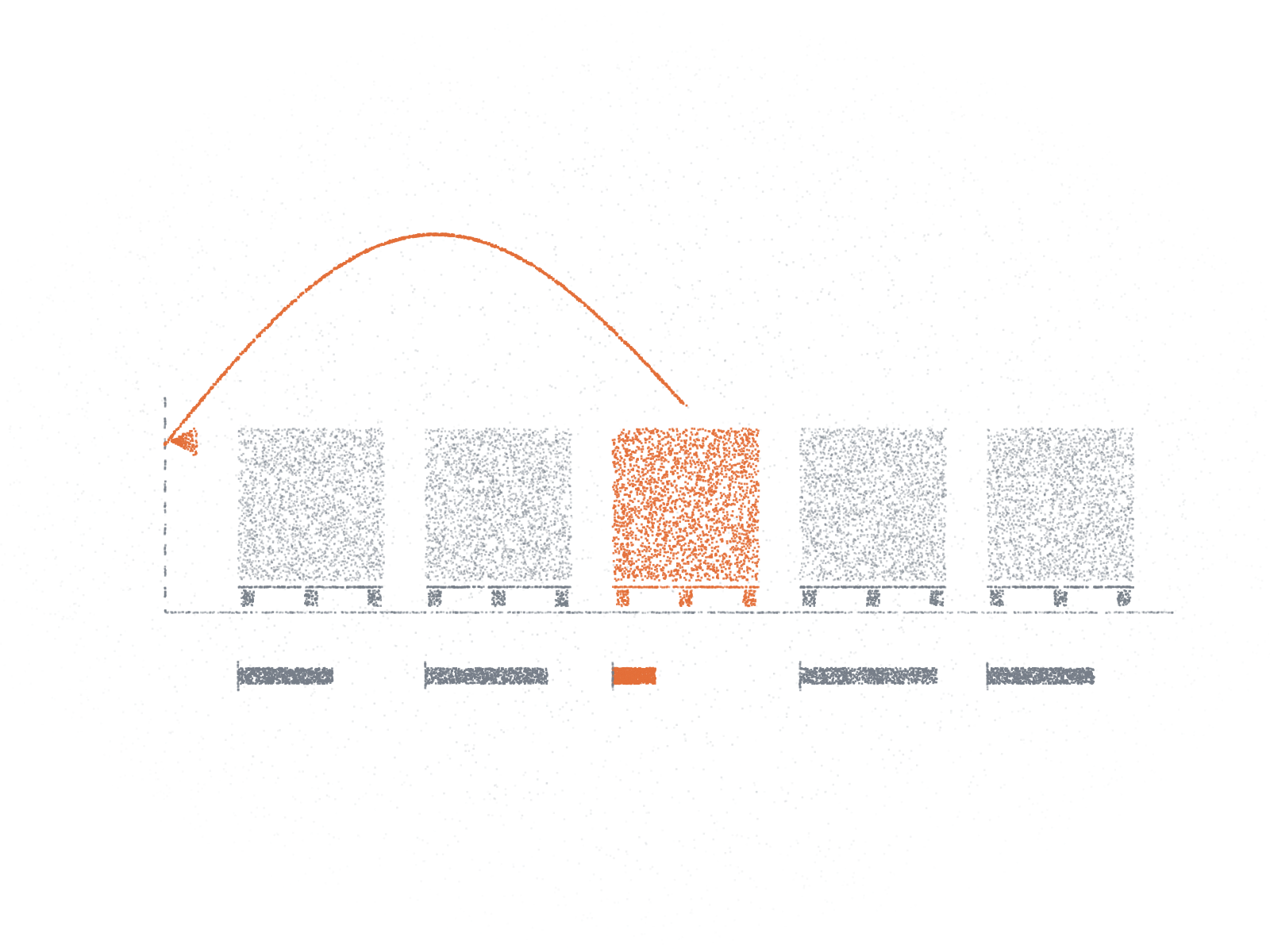
FIFO (first in, first out) ships the stock that arrived first; FEFO (first expired, first out) ships the stock that expires first. They pick the same pallet whenever lots arrive in the order they were made and share a shelf life, and they split when a lot made earlier arrives later. In the example below, FIFO leaves 16 of 48 pallets too old for the buyer; FEFO ships all 48. The EU’s guidelines for medicines distribution asked for FIFO in 1994 and for FEFO in 2013. The EU’s food hygiene and labelling regulations and the Codex food hygiene code name neither, the FDA’s Food Code recommends FIFO only in its annexes, and India’s food licensing rules require both.
| Rule | FIFO | FEFO | LIFO |
|---|---|---|---|
| Full form | First in, first out | First expired (or first expiry), first out | Last in, first out |
| Ships first | The oldest arrival | The earliest expiry date | The newest arrival |
| Needs per pallet | Arrival order | Lot and expiry date | Nothing: the rack decides |
| Same order as FEFO when | Lots arrive in the order they were made, one shelf life | — | Each lane holds one lot and lanes are emptied earliest expiry first |
| Racks that give it by design | Pallet flow, drive-through | None: any rack that reaches every pallet | Drive-in, push-back, one-sided shuttle |
What is the difference between FIFO and FEFO?
The sort key. FIFO sorts the stock by the date it arrived, FEFO by the date it expires, and each sends the first pallet in its list. Both are stock rotation rules for what physically leaves the warehouse. FIFO here is not the accounting method of the same name, and FEFO has no accounting namesake. FEFO needs one more piece of data: the lot and its expiry date on every pallet, which a receiving clerk or a warehouse system has to record (Lot number vs batch number).
LIFO, last in, first out, is rarely a choice: it comes with racks that load and unload from the same face, where the newest pallet blocks the ones behind it.
When are FIFO and FEFO the same?
When every lot of a product has the same shelf life, its expiry date is its production date plus that life, so sorting by expiry is sorting by production date. If the lots also arrive in the order they were made, arrival order is production order and FIFO gives exactly FEFO’s answer.
They split when a lot made earlier arrives later:
- Two sources. A far plant or supplier has a longer trip, so its lots arrive older than the near plant’s.
- Stock held upstream. A lot that waited at the maker, a port or another warehouse arrives with less life left.
- Returns. Pallets put back into stock can be older than what arrived since; the EU medicines guidelines ask for returns to be placed “such that the ‘first expired first out’ (FEFO) system operates effectively”.
- Different lives. A lot with a shorter shelf life than the rest expires earlier even if it was made later.
Ordering by production date is sometimes called FMFO, first manufactured, first out. With one shelf life it gives FEFO’s order; with lots of different lives it does not. The US defence manual quoted below uses it for items whose shelf life can be extended.
FEFO vs FIFO example: which pallet ships first?
One product with 30 days of shelf life. The buyer wants half of it left at delivery, 15 days, and is 1 day away, so a pallet must leave the store with at least 16 days to expiry: at an age of 14 days at the latest. A lot expires 30 days after the day it was made (Minimum remaining shelf life has the arithmetic). On 4 March the store holds two lots of 24 pallets and ships 4 pallets a day.
| Lot | Made | Arrived | Expires | Last day to leave for this buyer |
|---|---|---|---|---|
| A, near plant | 1 March | 3 March | 31 March | 15 March |
| B, far plant | 25 February | 4 March | 27 March | 11 March |
On 4 March, which lot should go first?
Show the answer
FIFO sends lot A, which arrived a day earlier. But lot B was made 4 days before A, so it expires first, and its last day for this buyer is 11 March, 4 days before A’s.
FIFO ships lot A from 4 March to 9 March, then lot B on 10 March and 11 March. On 12 March the other 16 pallets of B are still 15 days in date but too old for this buyer: they need another buyer with a lower minimum, a markdown or the bin. FEFO ships lot B from 4 March to 9 March, then lot A from 10 March to 15 March: all 48 pallets, the last of A on its last possible day.
FIFO did nothing wrong by its own rule: it shipped the oldest arrival every day. The loss comes from sorting by a date that does not say how long the stock will last. Had lot B been made after lot A, the two rules would have shipped the same pallets every day.
Is FEFO required by law?
For medicines distribution, mostly yes; for food, mostly no. What the texts say, quoted:
Medicines
- EU, 1994: “There should be a system to ensure stock rotation (‘first in first out’) with regular and frequent checks that the system is operating correctly.”
- EU, 2013, the guidelines in force today: “Stock should be rotated according to the ‘first expiry, first out’ (FEFO) principle. Exceptions should be documented.” Products near expiry are to be “withdrawn immediately from saleable stock”, physically or by electronic segregation.Guidelines on Good Distribution Practice of medicinal products for human use, 2013/C 343/01, § 5.5; the 1994 text is 94/C 63/03, ¶ 15. These are Commission guidelines; for veterinary medicines the same rule is in a regulation, with “shall”: “Stock shall be rotated according to the ‘first expiry, first out’ principle” (Regulation (EU) 2021/1248, Art. 24).
- WHO: “Stock should be appropriately rotated. The “first expired/first out” (FEFO) principle should be followed.” (TRS 1025, 2020, Annex 7, § 12.30). The same annex uses LIFO only for loading vehicles and containers, “to save time when unloading”, among other reasons.
- US: the drug manufacturing rules ask for “a procedure whereby the oldest approved stock of a drug product is distributed first”, and allow a deviation “if such deviation is temporary and appropriate” (21 CFR 211.150(a)). No section of the US Code of Federal Regulations uses the term FEFO (eCFR search, November 2026). The rule does not say which date makes stock “oldest”: read as made earliest, it gives FEFO’s order when every lot has the same shelf life; read as received earliest, it is FIFO.
Food
- EU: the food hygiene regulation asks for storage “in appropriate conditions designed to prevent harmful deterioration” and names no picking order (Regulation (EC) 852/2004, Annex II, Chapter IX). The labelling regulation makes the date matter: after the use-by date “a food shall be deemed to be unsafe” (Regulation (EU) 1169/2011, Art. 24).
- Codex, the international food code: “Stocks of raw materials and other ingredients should be subject to effective stock rotation”, with no rule for which (CXC 1-1969, § 13.2.8).
- FDA Food Code (a model code US states adopt): FIFO appears only in the annexes: Annex 5 recommends it for “both quality and safety reasons”, and Annex 4 does not count it as a critical control point. The code itself asks for date marking: ready-to-eat food that needs temperature control and is kept more than 24 hours is marked for at most 7 days at 5 °C (41 °F) (FDA Food Code 2022, § 3‑501.17, Annexes 4 and 5).
- UK: the Food Standards Agency’s guidance for caterers says “Follow the ‘first in, first out’ system of stock rotation, so that older stock is used first. This helps to avoid waste.” Guidance, not law.
- India: the rules for licensed food businesses say storage “shall be subjected to First in First out, First Expire First Out, which shall not be applicable to retailers.”Food Safety and Standards (Licensing and Registration of Food Businesses) Second Amendment Regulations, 2026, Gazette of India No. 418, 24 June 2026, replacing Schedule 4, Part II, § 5.2.5. The earlier text, as quoted in an FSSAI advisory of 16 December 2024: storage “shall be subject to FIFO …, FEFO … stock rotation system as applicable”. The 2026 text drops “as applicable” and exempts retailers.
So pages that call FEFO “mandatory in food” go further than the texts above: of these, only India’s rule requires it, and it names FIFO in the same breath. In food, FEFO is a way for a warehouse to keep stock from passing the dates the law does enforce.
When FEFO is not the whole rule
The buyer’s minimum. FEFO sends the earliest expiry first, even when that pallet is already too short for the buyer. A lot C, made 16 February and arriving on 5 March with 13 days left, would top FEFO’s list, but this buyer needs 16. So the working rule is FEFO among the lots the buyer still accepts, and lots too short for one buyer go to one with a lower minimum: the EU guidelines’ “appropriate remaining shelf life when it is picked” (§ 5.7), worked out in Minimum remaining shelf life.
Heat exposure. For temperature-sensitive products such as vaccines, the WHO puts the heat a batch has seen ahead of its date: “Products are distributed in strict EEFO order unless a product-based time-temperature exposure indicator, such as a vaccine vial monitor, demonstrates that a batch should be distributed ahead of its EEFO order.” EEFO, earliest expiry first out, is the WHO’s name for FEFO there.WHO TRS 961 (2011), Annex 9, § 8.3.1. For health workers: “the vaccines with the darkest squares should always be used first, even if the expiry date is later” (Immunization in practice, 2025, Module 2).
Equal dates. When two lots expire on the same day FEFO has no preference; arrival order is the natural tie-break.
Names. “FIFO” in a rule book does not always mean arrival order. The US Department of Defense’s shelf-life manual says to issue “on a FIFO basis”, then sorts items with a hard expiry “by the earliest date of expiration” (FEFO under another name) and items whose shelf life can be extended by the earliest manufactured date (DoDM 4140.27, Vol. 1, § 9.3, 2016 edition).
Which racks allow FEFO?
FEFO needs the pallet that expires first to be reachable when it is due. In single-deep selective and mobile racking every pallet is. In a pallet flow lane the front pallet is the first loaded, so the lane gives FEFO only if pallets go in by expiry date. In drive-in, push-back and one-sided shuttle lanes the front pallet is the last one loaded, so a lane holding two lots ships the lot loaded last first.
Deep lanes still work with FEFO when each lane holds one lot: all its pallets share a date, and the store empties the lanes earliest expiry first. Bartholdi and Hackman put the limit for deep lanes that are not loaded at one end and emptied at the other: FIFO “can be guaranteed only to within the lane depth”.Bartholdi, J. J. and Hackman, S. T., Warehouse & Distribution Science, release 0.98, § 6.4, pp. 69–70. Drive-in vs push-back vs pallet shuttle covers the three deep-lane racks.
Strict date order costs pallet places when it rules out deep lanes. The cold store tool keeps products that must leave strictly by date where the oldest pallet is always reachable. In a 60 × 50 m room with 12 m of clear height and 400 moves a day, making every product leave strictly by date costs:
| Room | Pallets per product | Pallets held, no date order | Every product by date | Lost |
|---|---|---|---|---|
| Chiller | 20 | 9,141 | 9,000 | 2% |
| Chiller | 50 | 9,501 | 9,000 | 5% |
| Chiller | 100 | 9,915 | 9,000 | 9% |
| Freezer | 20 | 8,703 | 8,100 | 7% |
| Freezer | 50 | 9,501 | 8,100 | 15% |
| Freezer | 100 | 9,915 | 8,100 | 18% |
The more pallets per product, the more deep lanes would have held, and the more date order costs: up to 18% of the freezer’s pallets at 100 pallets per product. With every product by date the tool fills the room with mobile racking, and the freezer needs one more moving aisle than the chiller for the same moves, so it loses more. The tool does not model deep lanes that each hold one lot, so these losses are the upper end for a store that can keep lots apart. The chiller’s side of this is in Cold storage racking.
Is FEFO an accounting method?
No. FIFO and LIFO are also names for ways of valuing inventory in the books, which move no pallet. FEFO is only a picking rule. A warehouse can ship by FEFO while its accounts value stock by FIFO or by average cost; the two choices are independent.
Where it breaks
- One product, one buyer. The example has two clean lots. Real deliveries can mix lots on one pallet or in one lane, and FEFO is then only as good as the lot records.
- “Required” has limits. The EU text for human medicines is a guideline that allows documented exceptions; the veterinary regulation and India’s food rule are law; the US drug rule asks for oldest stock, not earliest expiry. Your sector’s rule and your customer’s contract are the ones that apply.
- Laws checked: the EU, WHO, US federal, UK guidance and India texts quoted here, not every country or US state.
- The racking numbers are the tool’s, for one room and one stock profile; mixed lots and one-lot lanes are not modelled.
- Shelf life is in whole days. A lot made late in the day counts the same as one made early.
Sources
- European Commission, Guidelines on Good Distribution Practice of medicinal products for human use (2013/C 343/01), § 5.5, § 5.7, § 6.3.
- European Commission, Guidelines on Good Distribution Practice of medicinal products for human use (94/C 63/03, OJ C 63, 1 March 1994), ¶ 15 and ¶ 24.
- Regulation (EU) 2021/1248 on good distribution practice for veterinary medicinal products, Art. 24.
- WHO, Good storage and distribution practices for medical products, TRS 1025 (2020), Annex 7, § 12.30 and § 18.36.
- WHO, Model guidance for the storage and transport of time- and temperature-sensitive pharmaceutical products, TRS 961 (2011), Annex 9, § 8.3.1.
- WHO, Immunization in practice: a guide for health workers (2025), Module 2, § 5.1.
- US Code of Federal Regulations, 21 CFR 211.150, Distribution procedures.
- US Department of Defense, DoDM 4140.27 Vol. 1, Shelf-Life Item Management (6 July 2016, archived copy), § 9.3.
- Regulation (EC) 852/2004 on the hygiene of foodstuffs, Annex II, Chapter IX.
- Regulation (EU) 1169/2011 on food information to consumers, Art. 24.
- FAO and WHO, General Principles of Food Hygiene, CXC 1-1969 (revised 2022), § 13.2.8.
- US FDA, Food Code 2022, § 3‑501.17, Annex 4 and Annex 5.
- Food Standards Agency, Safer food, better business: stock control.
- Food Safety and Standards Authority of India, Second Amendment Regulations, 2026 (Gazette of India Extraordinary No. 418, 24 June 2026), Schedule 4, Part II, § 5.2.5.
- Bartholdi, J. J. and Hackman, S. T., Warehouse & Distribution Science, release 0.98, § 6.4.
- Picking run and racking numbers: computed in the post; racking by the cold store tool’s engine.
A planning explanation, not legal or quality advice. The rules quoted are the texts named; your sector’s rules and your customer’s contract are the ones that apply.