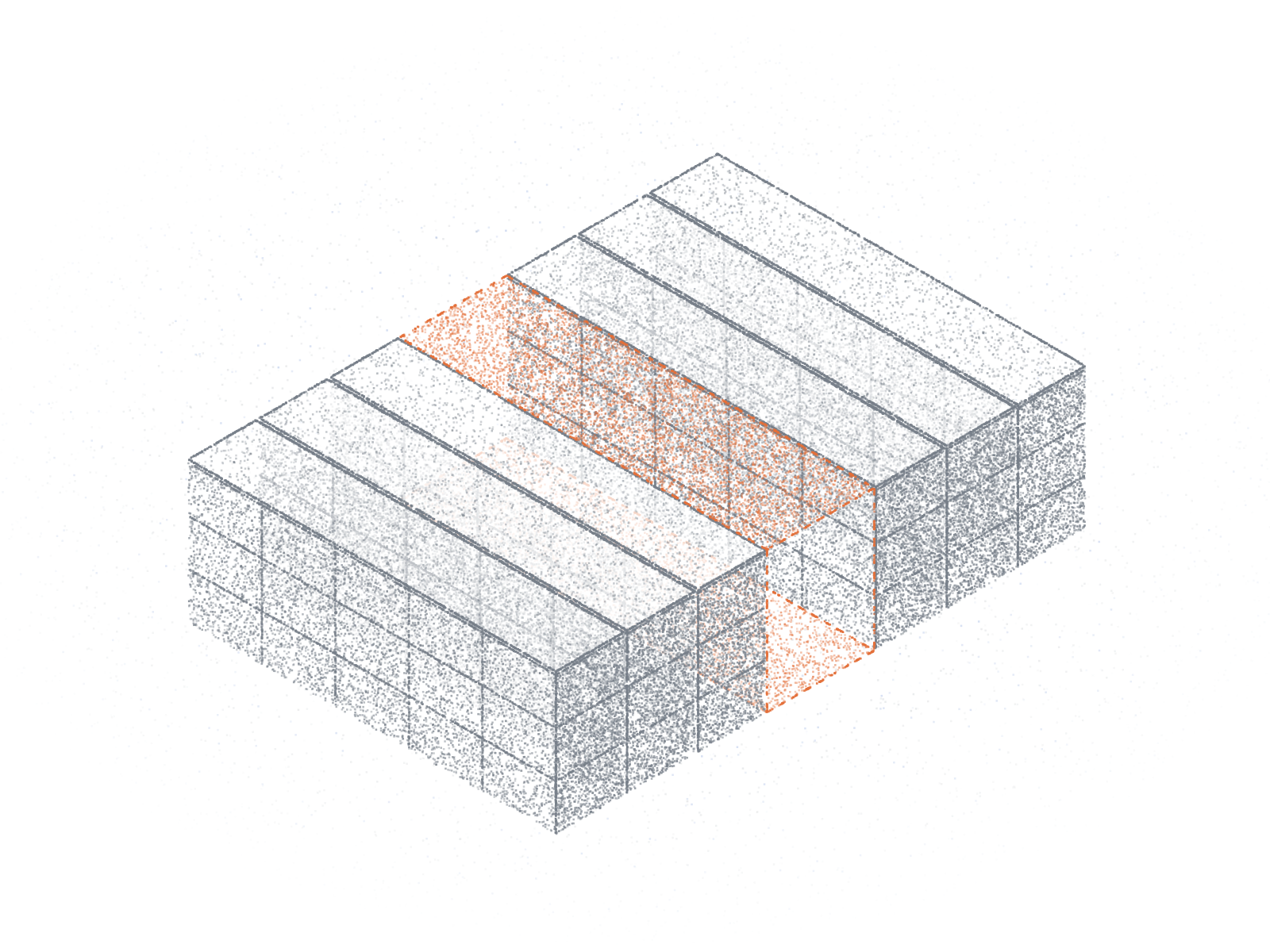
Cold storage racking: which rack type for a freezer or a chiller
In a 60 × 50 m freezer with 12 m of clear height and 400 pallets in and out a day, mobile racking holds the most pallets on its own until products have about 45 pallets each; above that a pallet shuttle does. Chill the same room to 0–8 °C and mobile racking stays ahead until about 70 pallets per product, and holds 9,000 pallets instead of 8,100, because drivers work 94% of each hour instead of 75% and one moving aisle fewer keeps up. Throughput moves the line again: at 1,250 moves a day mobile racking cannot keep up on its own in either room, and for big stocks the freezer is better off with push-back while the chiller keeps the shuttle. Pallets per product, moves a day and temperature pick the rack. Every figure here comes from the Cold store layout tool.
Three numbers that pick a cold storage rack
- Pallets per product. Deep lanes hold one product each, so they pay only when products have enough pallets to fill a lane. Below that the extra pallet places stand empty (honeycombing). The long version, with every rack type in one freezer, is Storage density vs selectivity.
- Moves a day. Each rack type moves only so many pallets an hour. In mobile racking every forklift needs its own open aisle, so the moves decide how many aisles stay open, and every open aisle costs places.
- Temperature. Cold shortens how long a driver can work, so the same moves need more forklifts at once. It also sets the energy bill and what the steel must take.
Freezer vs chiller: what the cold changes
German guidance on cold work, after DIN 33403-5, sets how long a person should work in the cold before warming up: below −18 °C, 90 minutes in and 30 out; from −5 to −18 °C, 90 in and 15 out; from +15 to −5 °C, 150 in and 10 out.BG BAU, Arbeiten bei Kälte, Infoblatt 4/2022, citing DIN 33403-5. A chiller at 0–8 °C sits in the warmest band. So a freezer driver works 75% of each hour and a chiller driver 94%. For the same moves a chiller needs about 80% of the freezer’s forklifts.
In mobile racking that becomes aisles. The tool counts about 20 moves an hour through one open aisle and plans for a peak hour of 1.5 times the average over 16 hours:
| Moves a day | Open aisles, freezer | Open aisles, chiller |
|---|---|---|
| 100 | 1 | 1 |
| 250 | 2 | 2 |
| 400 | 3 | 2 |
| 650 | 5 | 4 |
| 800 | 5 | 4 |
| 1,250 | 8 | 7 |
Each open aisle costs places: in this room mobile racking has 9,450 places with one moving aisle and 9,000, 8,100, 7,200 with two, three and four, against 5,400 in selective racking. Mobile racking stops at four moving aisles in the tool, so on its own it keeps up with about 640 moves a day in a freezer and 800 in a chiller. At 400 moves the chiller needs two aisles where the freezer needs three, though only just: two aisles carry 37.6 moves an hour against the 37.5 the peak needs.
Rack makers’ claims have to be read against this. One says mobile racking gives “up to 80%” more capacity than selective racking.Dexion, 4 tips for cold store pallet racking (vendor). In this room one moving aisle gives 75% more places; the three a freezer needs at 400 moves give 50% more.
- Best split into two rack types
- Best rack type on its own
The numbers as a table
| Pallets per product | Best split | Selective | Double-deep | Drive-in | Push-back | Flow | Shuttle | Mobile |
|---|---|---|---|---|---|---|---|---|
| 1 | 8,100 | 5,400 | 3,600 | 558 | 2,790 | 1,550 | 1,900 | 8,100 |
| 2 | 8,282 | 5,400 | 4,923 | 1,040 | 3,815 | 2,394 | 3,135 | 8,100 |
| 3 | 8,422 | 5,400 | 5,655 | 1,476 | 4,382 | 2,957 | 4,042 | 8,100 |
| 5 | 8,397 | 5,400 | 6,369 | 2,236 | 5,340 | 3,689 | 5,271 | 8,100 |
| 7 | 8,486 | 5,400 | 6,632 | 2,797 | 5,899 | 4,129 | 5,899 | 8,100 |
| 10 | 8,576 | 5,400 | 6,814 | 3,388 | 6,404 | 4,725 | 6,404 | 8,100 |
| 15 | 8,666 | 5,400 | 6,948 | 4,121 | 6,807 | 5,435 | 6,807 | 8,100 |
| 20 | 8,714 | 5,400 | 7,013 | 4,654 | 7,009 | 5,919 | 7,009 | 8,100 |
| 25 | 8,744 | 5,400 | 7,051 | 5,024 | 7,129 | 6,233 | 7,154 | 8,100 |
| 30 | 8,765 | 5,400 | 7,077 | 5,373 | 7,220 | 6,452 | 7,459 | 8,100 |
| 35 | 8,780 | 5,400 | 7,095 | 5,645 | 7,296 | 6,612 | 7,684 | 8,100 |
| 40 | 8,807 | 5,400 | 7,108 | 5,861 | 7,354 | 6,733 | 7,857 | 8,100 |
| 45 | 8,897 | 5,400 | 7,118 | 6,036 | 7,398 | 6,828 | 7,995 | 8,100 |
| 50 | 8,971 | 5,400 | 7,127 | 6,180 | 7,434 | 6,905 | 8,115 | 8,100 |
| 60 | 9,081 | 5,400 | 7,139 | 6,403 | 7,487 | 7,021 | 8,498 | 8,100 |
| 70 | 9,162 | 5,400 | 7,148 | 6,568 | 7,525 | 7,104 | 8,785 | 8,100 |
| 80 | 9,225 | 5,400 | 7,154 | 6,693 | 7,554 | 7,166 | 9,006 | 8,100 |
| 90 | 9,274 | 5,400 | 7,159 | 6,793 | 7,576 | 7,215 | 9,182 | 8,100 |
| 100 | 9,326 | 5,400 | 7,164 | 6,872 | 7,593 | 7,254 | 9,326 | 8,100 |
| 120 | 9,542 | 5,400 | 7,170 | 6,992 | 7,620 | 7,312 | 9,542 | 8,100 |
| 150 | 9,765 | 5,400 | 7,176 | 7,151 | 7,646 | 7,370 | 9,765 | 8,100 |
| 200 | 9,988 | 5,400 | 7,182 | 7,448 | 7,672 | 7,428 | 9,988 | 8,100 |
| 300 | 10,213 | 5,400 | 7,188 | 7,752 | 7,698 | 7,486 | 10,213 | 8,100 |
- Best split into two rack types
- Best rack type on its own
The numbers as a table
| Pallets per product | Best split | Selective | Double-deep | Drive-in | Push-back | Flow | Shuttle | Mobile |
|---|---|---|---|---|---|---|---|---|
| 1 | 9,000 | 5,400 | 3,600 | 558 | 2,790 | 1,550 | 1,900 | 9,000 |
| 2 | 9,000 | 5,400 | 4,923 | 1,040 | 3,815 | 2,394 | 3,135 | 9,000 |
| 3 | 9,000 | 5,400 | 5,655 | 1,476 | 4,382 | 2,957 | 4,042 | 9,000 |
| 5 | 9,000 | 5,400 | 6,369 | 2,236 | 5,340 | 3,689 | 5,271 | 9,000 |
| 7 | 9,000 | 5,400 | 6,632 | 2,797 | 5,899 | 4,129 | 5,899 | 9,000 |
| 10 | 9,000 | 5,400 | 6,814 | 3,388 | 6,404 | 4,725 | 6,404 | 9,000 |
| 15 | 9,003 | 5,400 | 6,948 | 4,121 | 6,807 | 5,435 | 6,807 | 9,000 |
| 20 | 9,016 | 5,400 | 7,013 | 4,654 | 7,009 | 5,919 | 7,009 | 9,000 |
| 25 | 9,046 | 5,400 | 7,051 | 5,024 | 7,129 | 6,233 | 7,154 | 9,000 |
| 30 | 9,076 | 5,400 | 7,077 | 5,373 | 7,220 | 6,452 | 7,459 | 9,000 |
| 35 | 9,099 | 5,400 | 7,095 | 5,645 | 7,296 | 6,612 | 7,684 | 9,000 |
| 40 | 9,116 | 5,400 | 7,108 | 5,861 | 7,354 | 6,733 | 7,857 | 9,000 |
| 45 | 9,129 | 5,400 | 7,118 | 6,036 | 7,398 | 6,828 | 7,995 | 9,000 |
| 50 | 9,140 | 5,400 | 7,127 | 6,180 | 7,434 | 6,905 | 8,115 | 9,000 |
| 60 | 9,156 | 5,400 | 7,139 | 6,403 | 7,487 | 7,021 | 8,498 | 9,000 |
| 70 | 9,167 | 5,400 | 7,148 | 6,568 | 7,525 | 7,104 | 8,785 | 9,000 |
| 80 | 9,225 | 5,400 | 7,154 | 6,693 | 7,554 | 7,166 | 9,006 | 9,000 |
| 90 | 9,274 | 5,400 | 7,159 | 6,793 | 7,576 | 7,215 | 9,182 | 9,000 |
| 100 | 9,326 | 5,400 | 7,164 | 6,872 | 7,593 | 7,254 | 9,326 | 9,000 |
| 120 | 9,542 | 5,400 | 7,170 | 6,992 | 7,620 | 7,312 | 9,542 | 9,000 |
| 150 | 9,765 | 5,400 | 7,176 | 7,151 | 7,646 | 7,370 | 9,765 | 9,000 |
| 200 | 9,988 | 5,400 | 7,182 | 7,448 | 7,672 | 7,428 | 9,988 | 9,000 |
| 300 | 10,213 | 5,400 | 7,188 | 7,752 | 7,698 | 7,486 | 10,213 | 9,000 |
Two things change in the chiller. Mobile racking alone holds more, 9,000 against 8,100 pallets at 7 per product (freezer, chiller). And it needs less help: in the freezer a split into mobile racking and a deep zone adds 5% more at 7 per product, in the chiller nothing.
Energy. A European survey of food cold stores found means of about 69 kWh per m³ of room a year frozen and 56 chilled, but with a spread many times wider than the gap: 6 to 240 frozen, 4 to 250 chilled. It also found that frozen stores used less per m³ as they grew and chilled stores did not; above 22,000 m³, chilled stores used more energy than frozen ones.ICE-E project, publishable report, and Evans et al. via the International Institute of Refrigeration. This room is 36,000 m³. So do not count on a chiller being cheaper to run per m³. The rack does not change the room’s volume; denser layouts lower the energy per pallet, not per room.
Busy stores: when mobile racking can’t keep up
At 1,250 moves a day a freezer needs 8 open aisles and a chiller 7, more than mobile racking has. On its own, the answer moves to rack types with aisles that are always open; in a split, mobile racking still takes the share of the moves it can carry (the retail DC in the next table). For small stocks, double-deep racking holds the most on its own (6,632 pallets at 7 per product). For big stocks the temperature decides between the two deep types: in the freezer push-back racking holds 7,698 at 300 pallets per product, because deep shuttle lanes leave too few aisles for the forklifts a freezer needs; in the chiller the shuttle holds 8,952, 16% more (freezer, chiller).
Which rack for which store
The tool’s “most pallets” layout for five kinds of cold store:
| Store | Most pallets | Pallets held |
|---|---|---|
| Small producer chamber 24 × 15 × 9 m, 30 pallets per product, 60 moves a day | pallet shuttle 12 deep | 795 of 960 places |
| Regional 3PL, many small clients 40 × 30 × 10 m, 5 per product, 250 moves | mobile, 1 moving aisle + pallet shuttle 8 deep | 2,611 of 2,736 places |
| Bulk frozen-veg producer 60 × 40 × 12 m, 80 per product, 450 moves | mobile, 1 moving aisle + pallet shuttle 26 deep | 7,721 of 8,280 places |
| Retail frozen DC 60 × 50 × 12 m, 11 per product, 1,250 moves | mobile, 4 moving aisles + pallet shuttle 6 deep | 7,103 of 7,320 places |
| Chilled distributor, short shelf life 40 × 30 × 9 m, 4 per product, 60% strictly by date | mobile, 2 moving aisles | 2,304 of 2,304 places |
The pattern: few products with deep stock want one deep system; many small products want mobile racking, with a deep block for the few big ones; high throughput caps mobile racking at the aisles it can open; and short-dated chilled stock stays in racks where every pallet can be reached.
Cold storage pallet racking, type by type
Selective racking
Nothing moves first: every pallet faces the aisle.
Mobile racking
Nothing moves first once its aisle is open: the racks roll about 40 s to open it.
Double-deep racking
1 pallet moves first: the one in front.
Push-back racking
2 pallets move first, on this level only; the rest roll forward on carts.
Drive-in racking
12 pallets move first: the truck drives into the lane, so all levels in front of it go.
Pallet flow racking
Nothing moves first for the oldest pallet: it rolls to the front. Pallets go in at the back.
Pallet shuttle
4 pallets move first. The shuttle (dark) carries them inside the lane; the forklift stays at the face.
- Selective. Every pallet faces an aisle, so any order works and pickers can work from it all day. It has the fewest places; in a cold room it earns its floor for case picking and for very small stocks at high throughput.
- Mobile. Selective racking on rolling bases with only a few aisles open. It holds the most for small and medium stocks in both rooms above, and reaches every pallet once its aisle is open. Its limit is moves.
- Double-deep. Two pallets per lane, one moves first. The simple answer for busy stores with small stocks.
- Push-back. Short lanes on carts, loaded and emptied from the front, so last in, first out (LIFO). Short lanes leave room for more aisles, which is why it beats the shuttle in a busy freezer.
- Drive-in. The forklift drives into the lane, so a lane holds one product and empties last in, first out. Dense, and with small stocks it honeycombs the most.
- Pallet flow. Pallets go in at the back and roll to the front, so first in, first out (FIFO) by design, with separate aisles for loading and picking.
- Pallet shuttle. A battery shuttle carries pallets inside deep lanes while the forklift stays at the face. The most pallets for big stocks at moderate moves.
Date order in a chiller
Chilled stock is often short-dated and must leave first expired, first out, which deep LIFO lanes cannot do. The tool keeps products that must leave strictly by date in selective, mobile or flow racking. At 20 pallets per product and 400 moves, making every product leave strictly by date leaves the chiller with 2% fewer pallets (9,141 to 9,000), and the freezer with 7% fewer (8,703 to 8,100). The chiller loses little because mobile racking, which reaches every pallet, already holds nearly the most there. Retailers’ minimum remaining shelf life rules and lot tracking are why date order is not optional for most chilled food.
What the cold does to the racks
- Steel. Steel grows more brittle as it gets colder, and the European rack design standard, EN 15512, has a clause on fracture toughness. Freezers at about −25 to −30 °C are routine for rack makers; some have gone to −40 °C, and ultra-low stores are specialist work.DIN EN 15512:2021, clause 7.1.7 (table of contents). SEMA’s answer to a reader, Warehouse & Logistics News, 7 Aug 2023. Dexion, for one, rates its cold-store systems down to −30 °C; check the rating for anything colder.
- Pallets. Cold stores often set their own pallet size and weight limits, and they set the rack’s beam and lane dimensions.
- Sprinklers. Fire codes keep storage below the sprinkler heads: under NFPA 13, at least 457 mm (18 in) for standard sprinklers and 914 mm (36 in) for ESFR heads.Summary of NFPA 13 clearance-to-storage rules. European codes (EN 12845, VdS) were not checked. Freezers use dry or preaction systems, because water standing in the pipes would freeze. The tool leaves 0.5 m above the top pallet, which is not enough under ESFR.
- Coolers and air. Evaporators hang over the racks, and the air from them has to reach every aisle. Leave the clearance the cooler maker asks for, which in a low room can cost a pallet level.
Where this breaks
- The work-time bands are a guideline, applied to the whole forklift fleet. Heated cabs and shift rotation change what drivers can do, and so the aisles a room needs.
- Moves an hour per rack type are estimates from data sheets and vendor figures; no standard exists. At 400 moves the chiller’s two aisles are on the edge.
- Costs are not compared. The tool prices a freezer and a chiller room the same per m²; real freezer buildings cost more.
- One rectangular room on an average day. No columns, docks or seasonal peaks, and no fire, structure or floor check: those are the rack supplier’s and the fire engineer’s job.
- The stock spread is assumed: the biggest 20% of products hold 70% of the pallets in these runs. A real stock list is the fix.
Sources
- BG BAU, Arbeiten bei Kälte, Infoblatt 4/2022, citing DIN 33403-5. PDF
- ICE-E, Improving Cold storage Equipment in Europe, publishable report (Teknologisk Institut). PDF
- Evans, J. et al., specific energy consumption of food cold stores, via the International Institute of Refrigeration. IIR news, Fridoc
- DIN EN 15512:2021-06, Steel static storage systems: adjustable pallet racking systems: principles for structural design, table of contents. DIN
- SEMA reply on racking at low temperatures, Warehouse & Logistics News, 7 Aug 2023. Article
- NFPA 13 clearance to storage, summary. Open Exam Prep; refrigerated area sprinkler systems (vendor): Viking
- Dexion, 4 tips for cold store pallet racking and cold and frozen goods (vendor).
- Layouts, pallets held, aisles and forklifts: the Cold store layout engine.
A planning explanation, not a rack design. The numbers are the tool’s model of example rooms; rack suppliers check structure, fire rules and floor load. Vendor figures are marked as such.